• Bluesky
  • Fediverse
  • Newsletter
  • Feed
← Home Archive Now Search Subscribe
  • Going Native

    Matt Birchler opines on the subject of making cross-platform apps native.

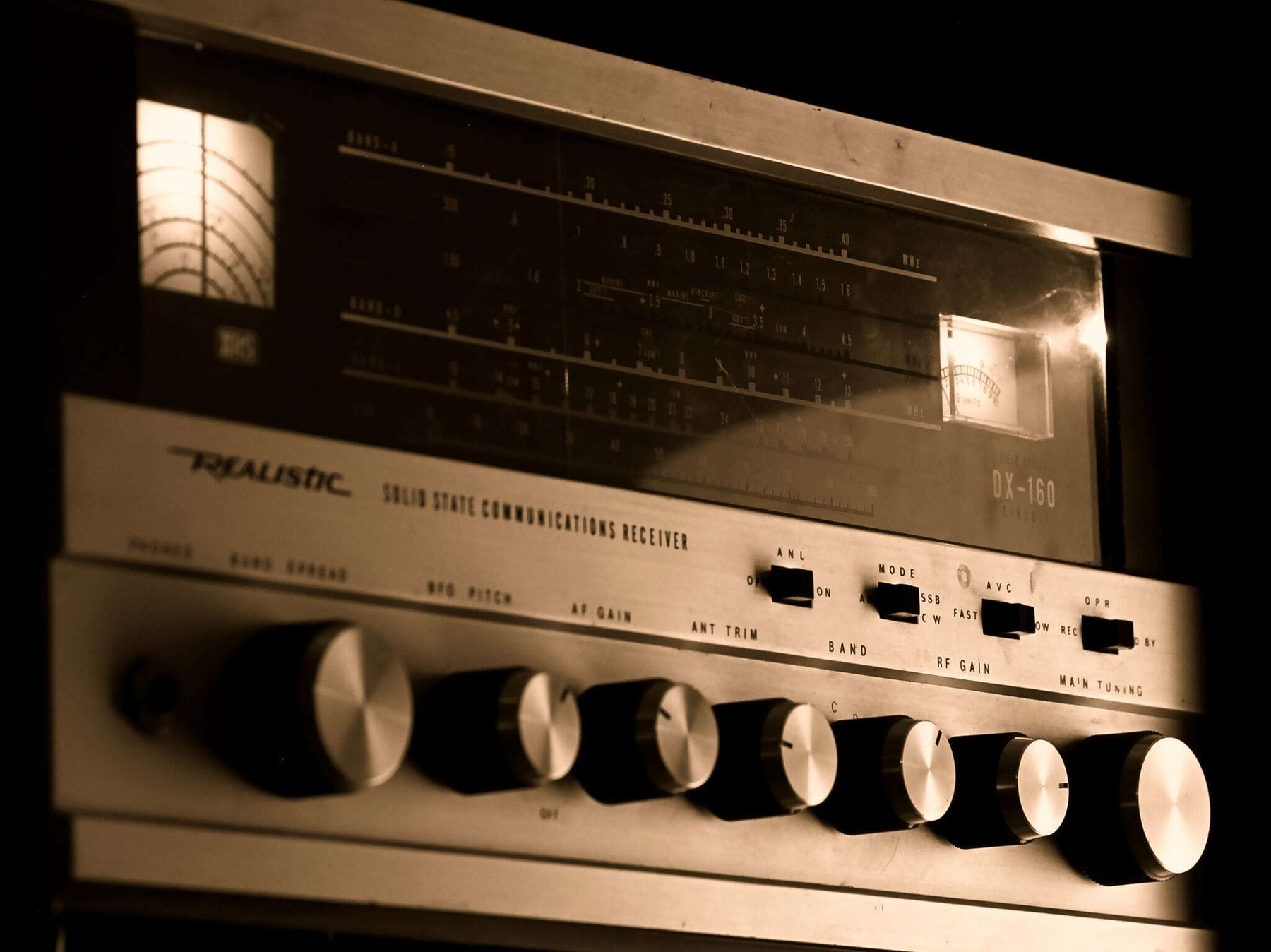
    React and Electron made sense in a world where code was expensive and duplicating the same work on multiple platforms was tons of effort. React and Electron allowed you to save time, which was valuable to companies, and frankly, to those on smaller platforms (don’t get me started on how much software form the past decade runs on the Mac only because Electron made it easy to do so).
    Read more

    ⌘ 5:19 PM, Nov 13
  • Natural Orchestra

    My wife related to me that she was glad we use Qobuz for our music streaming service, since she had read it was one of the more ethical services in terms of artist payments. I’m happy to see ethics driving consumer decisions around what services to use.

    I remember, in the 90s, some friends telling me not to eat at Wendy’s because Dave Thomas supported “conservative causes.” I read a biography of Dave Thomas. He was an orphan and the main cause he championed was orphanages. As Johnny Depp’s character says in John Waters’ Cry Baby, “orphans have special needs.” Somehow the plight of those without parents became coded as conservative and my friends were definitely against it. After that conversation, I finally felt like I understood the phrase “kneejerk liberal,” which was a fairly common one in those days.

    Read more

    ⌘ 8:00 AM, Oct 18
  • Pixelpalooza

    If you love pixels as much as I do, you’ll be delighted to learn that Héliographe has released Bitcam 2, which expands the capabilities beyond the original app by Iconfactory. This time around, you can open photos from other apps in the 1-bit camera and editor and use the pixelated filters until your heart’s content. It works in black & white (no grayscale) and color.

    Read more

    ⌘ 6:57 PM, Oct 6
  • The Ruby on Rails conference, Rails World 2026, has been much discussed, more for what it left out than what it contained (the keynote hardly mentioned the technology the conference was designed around). From Ronan Limon Duparcmeur at 2-45.pm, regarding DHH’s keynote.

    Obviously, this was a weird keynote, as I’ve said. It felt off to me. It has to be the first time that the opening keynote of the official event about “the latest features and best practices” of a piece of technology doesn’t mention said piece of technology, tells the participants that their jobs are now obsolete, and ends on the appeal to not “be a loser”.

    Duparcmeur remarks about the keynote being more about DHH himself, and his current interests. “Who knows, there may be people who are into DHH himself, like a Temu Elon Musk.”

    ⌘ 1:33 PM, Sep 27
  • The Other Side

    Now that the dust is settling from last weekend’s AI freakout, we are hearing from opposing voices. From my vantage point, I think there are good points on both sides and regardless of whether some of the more breathless predictions of doom may be off, we need more oversight and regulation. Our government just isn’t keeping up on this issue.

    Read more

    ⌘ 6:06 PM, Sep 19
  • I’ve gotten myself in a confused state with regard to my RSS and social media feeds.

    1. I’m using Reeder, which allows you to follow RSS, Mastodon, Bluesky and Micro.blog feeds. I’m following all four of those in a jumble.
    2. I’m also using Indigo, which can follow Bluesky and Mastodon feeds.
    3. I like the native experience, so I’m using the Bluesky app and site. I also use the Micro.blog app and site.

    All this means I see posts multiple times. Since I’m only really using one RSS reader (Reeder), disentangling from this mess will mostly mean being more deliberate about my social media following. I’ll have to unwind where I’m following what people, which could take a while.

    ⌘ 5:56 AM, Sep 16
  • Charles Homans takes a different perspective on the changes brought about by 9/11. In fact, he argues that much of the changes we attribute to the attacks we actually brought about by technology.

    These artifacts span the pre- and post-9/11 years, and the lost innocence they represent has nothing to do with the attacks. Their interest comes from their evocation of a period when people hung out with friends in person and sweated alongside strangers at clubs and music festivals; teenagers goofed un-self-consciously for cameras rather than posing for them like jaded celebrities; and popular culture could be loud and dumb and not picked apart in the digital panopticon for its social politics. The shape that looms ominously over them isn’t the Twin Towers. It’s the iPhone.

    It’s taken for granted that things really changed after the September 11th attacks, and it’s measurably true. But how much of that is actually due to the attacks is highly debatable.

    ⌘ 8:35 PM, Sep 10
  • Cal Newport believes much of the fearmongering that is done by tech executives in the A.I. space is due to their backgrounds in Rationalism and related philosophies.

    This reality, that Rationalism deeply influenced many of today’s major A.I. companies, helps us calibrate the unnerving language we’ve been hearing from their leaders. When Mr. Altman declares their pending models will be “sobering” for humanity or Mr. Amodei frets that this technology “will test who we are as a species,” it doesn’t necessarily mean that they discovered frightening new evidence that something catastrophic is imminent.

    I listened to Newport expand upon this theory on the Not Dead Yet podcast. He’s got a convincing argument that the Rationalist movement has so strongly influenced these executives that they are simply parroting its talking points. He points out that tech execs who don’t come from those backgrounds — such as those in China and Jensen Huang of Nvidia — speak in an entirely different way about A.I. Newport’s view seems to explain a lot about the rhetoric we’re used to hearing from certain quarters.

    ⌘ 6:00 AM, Sep 9
  • Bill Gates is coming out of a period of semi-seclusion to raise the alarm bells about generative A.I. Karen Weise covers the story for The NYT. One of the main concerns that Gates has is the potential for massive job losses.

    He proposed a new tax on A.I. use, known as a “token tax,” to make it more expensive to replace people and provide money to help those who do lose work. A token is a basic unit of A.I. computing. The idea of taxing it has gained some traction, including on Wall Street, as a way to increase the cost of using machines instead of human labor.

    Gates wrote a personal essay on his site about how dangerous the situation could be if we don’t take it seriously.

    AI will either be the greatest equalizer ever invented, or the worst source of injustice.

    The man is not downplaying the stakes here. He believes that the reason his peers are not coming forward is that there is too much money to be gained.

    ⌘ 7:00 PM, Aug 26
  • Down With Podcasts

    At this point, I tend to average 1-2 podcasts a week. I’m in hybrid work mode, which means I drive to an office on a local college campus two days out of the week and work remotely from my home office the other three days. That gives me time for about 90 minutes of podcasts on my commute. My number one selection currently is Not Dead Yet (Apple Podcasts) hosted by Ben Sasse and Chris Stirewalt. As Ben Sasse undergoes treatment for his pancreatic cancer (and faces his own mortality), he’s been interested in discussing what comprises the good life.

    Read more

    ⌘ 6:41 PM, Aug 21
Page 1 of 5 Older Posts →
  • Archive
  • Now
  • Micro.blog